
CHRONICLE | Feeding coherence
A partir do novo vazamento em Congonhas, a crônica reflete sobre medo, hipocrisia e a urgência de transformar indignação em organização popular
Published 13/02/2026 - Updated 12/08/2026
Three characters wander through the streets of Congonhas, especially starting from January 25th. They go by Hypocrisy, Fear, and Coherence, and each reveals themselves particularly in the context of crimes, whether in the “sumps,” in the collapse of the Vale dam in Brumadinho seven years ago—killing 272 people—or anywhere else in the world.
On these occasions, such figures come out of the closet.
Hypocrisy is “worth” nothing because, with its “sumps” in Mina de Fábrica and Viga, it puts thousands of lives at risk and, moreover, creates a smokescreen around the correct term for the fact, confuses tongues, and seeks to divert attention from the central point.
A MAB activist, watching closely, understands that “sumps” in mining (or sedimentation ponds) are reservoirs to capture, store, and decant water before disposal or reuse. But currently, their main function is to bypass the law, since, not being dams, they require no inspection.
“Sumps” are built by the hundreds! In the Mina de Fábrica and Viga areas alone, there are reportedly around 400, and about 10 compromised ones were enough to spill approximately 600,000 m³ of industrial production effluents into various waterways, significantly increasing the contamination of the Maranhão and Paraopeba rivers.
Fear, for its part, previously hidden behind evacuation route signs that cost millions for nothing, now lives in afflicted minds and hearts. Realizing the genuine risk and divided in double sentiment, they give thanks that it wasn’t worse that Sunday, January 25th. At the same time, they take the crime as a warning, recognizing that full participation of the people—with the power of “yes” and “no”—is the only reliable path to safety in a violently exploited territory that is increasingly vulnerable due to the climate emergency.
Without a people willing to participate, everything ends in “Terms of Conduct Adjustment,” which adjust almost nothing, and fines that generally go unpaid. This is because governments too, despite the best intentions and seriousness, carry deep within themselves much fragility within this crazy capitalist machinery, and on their own achieve only small bandages without stopping the bleeding.
Mr. Fear proclaims along the street a rush to pharmacies and churches in search of drugs and prayers for a lifeline, and at times whispers a desire for the presence of media priests in a jubilee show, which soothes some pain through anesthesia. Congonhas does not need them for that, and the priests who labor here alongside their teams, establishing and multiplying living communities, thank the Secretary of Culture for the courtesy of the consultation.
While Fear reigns, Ms. Hypocrisy continues free and untethered, spitting on Master Aleijadinho’s petrified prophets, destroying the mountains that form their frame.
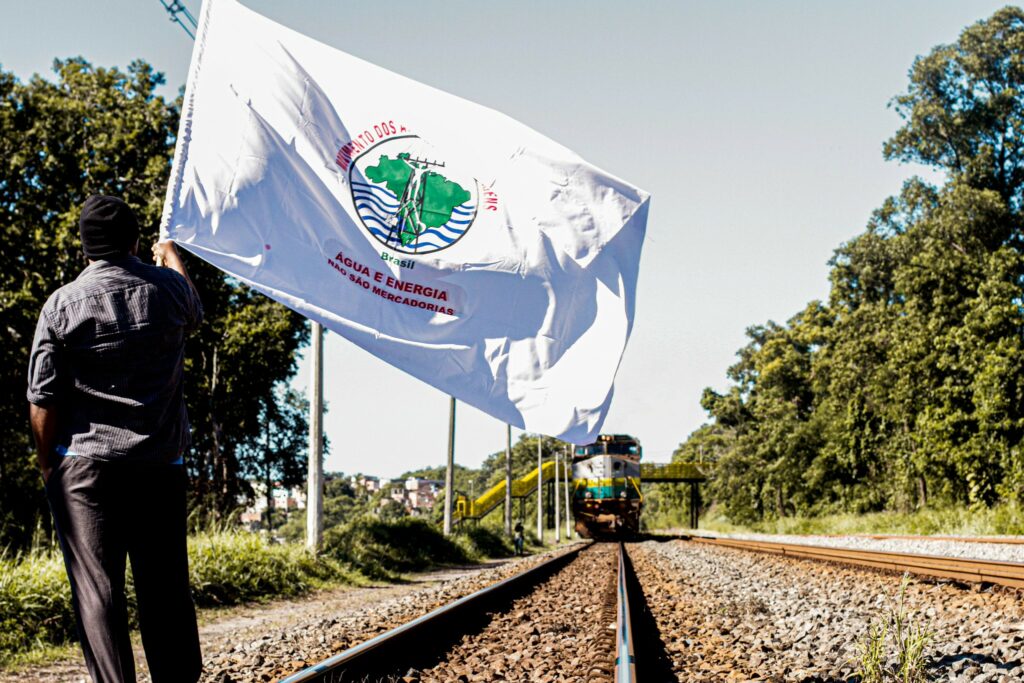
The crossroads is set: either the symbolic power of faith and individual weeping are transformed into collective community resistance and organized indignation, or no stone will be left unturned, because until now, “the train prospers” toward destruction, regardless of the common good, under the governor’s baton.
Hope lies in Ms. Coherence, who, though drowsy, has always been embryonic in anonymous personal testimonies and in some collective attempts, above all in the promising struggles of the Campinho and Santa Quitéria quilombos, posing an important obstacle to the expansion of ore mining and waste piles. And now she confronts Vale’s power, as the Federal Public Prosecutor’s Office requests a block of 1 billion from the mining company—though unsuccessfully—and the City Hall of Congonhas, thanks to the timely action of the Municipal Secretariat of Environment, suspends the company’s permit.
The counterattack from the mining companies and accomplices will be violent. That is why Coherence, aware that Hypocrisy’s schemes together with Fear tend to paralyze people, seeks popular energy to put blood in her veins. Beyond resisting, she leverages the crime in the “sumps” to give voice to sovereignty and the right to self-determination for communities.
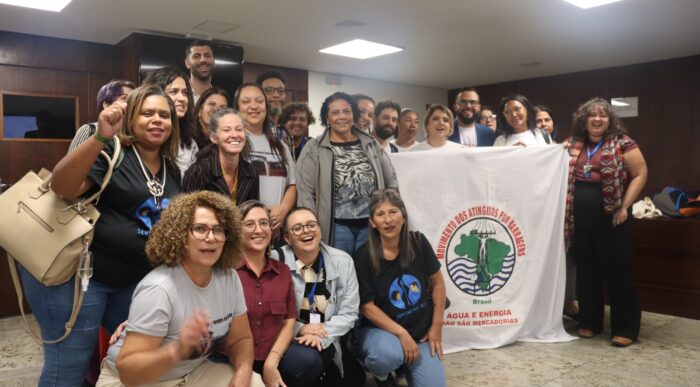
MAB has placed itself along this trajectory since Vale’s crime in Mariana, and is preparing a major gathering for March 14th in the city of the prophets, determined to be an active subject in this uprising. In this, it counts on the people’s eternal reservoir of rebelliousness, the active presence of partners, and the support of public managers and other authorities, for a task of this magnitude is only possible through the work of many hands.
Congonhas is known worldwide for its architectural ensemble listed by UNESCO and for its dangerous dams; now, it will have the chance to be a pioneer in our country in implementing the National Policy for Populations Affected by Dams (PNAB).
A law on its own does not solve much, but if well-handled, it can be a decisive tool in the social control of natural resources.
* Padre Antônio Claret, linked to the Archdiocese of Mariana, has defended the rights of the most oppressed segment of the population since the beginning of his priesthood. He is also a coordinator of the MAB in Congonhas, where he works in communities affected by the region’s dams, drawing on the methodology of base ecclesial communities.