Traditional populations warn of attacks on national and popular sovereignty in an increasingly threatened Brazil
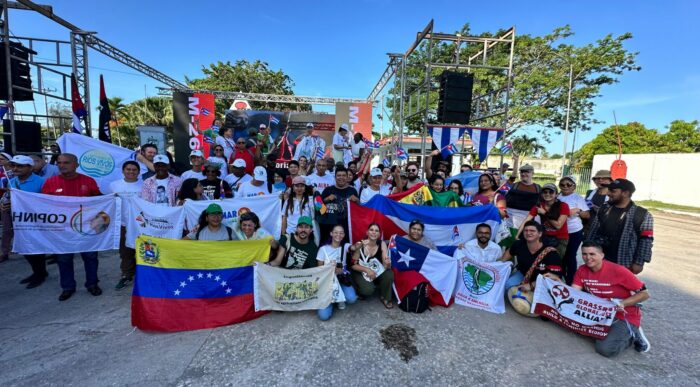
From the tariff hikes to the Devastation Bill, imperialism intensifies its offensive against Brazilian sovereignty and threatens the autonomy of peoples over their territories. Those affected will be mobilized in defense of sovereignty on September 5 – Amazon Day – and on September 7 across the country
Published 03/09/2025 - Updated 10/11/2025

When Donald Trump threatened to tax Brazilian imports, the story was told as a commercial and political dispute. The issue, however, is that beyond duties and tariffs, the tax hike confirmed that the U.S. has never abandoned its greed for what it considers to be “Brazil’s riches.” From rare earths to Petrobrás oil, history repeats itself: imperialism seeks to control our natural resources to feed its machine of capitalist accumulation.
The espionage carried out by the United States National Security Agency (NSA) against Petrobras and the coup that overthrew President Dilma Rousseff in 2016 were not accidental. They are part of a project of domination aimed at ensuring that Brazil remains an exporter of commodities, with its wealth in the hands of foreign corporations.
Iury Paulino, from MAB’s National Coordination, points out: it is no surprise that we are historical victims of imperialism’s plunder, and that “for centuries we have seen our wealth taken away to promote the development of others.” He further adds: “What remains for us are the social and environmental ills produced by this systemic looting.”
Paulino’s warning is about this new phase of U.S. imperialism over Latin America, particularly in Brazil, driven by the advance of the far right:
“It is a frontal attack on sovereignty, one that seeks to deregulate the state by weakening its laws, as they are attempting with the so-called ‘Devastation Bill.’ They target the economic system, as in the case of tariffs, to secure economic advantages, but also to interfere in the politics of nation-states, increasingly seeking to empower the sellout factions, whether through elections or by promoting coups.”
Brazilwood, sugar, gold, diamonds, coffee, lithium, energy (which they have the audacity to call ‘green’), and so many others. The list of exploitation spans centuries, reaches our present day under this new face of imperialism, and will likely extend for decades to come under the same logic: the people lose, capital wins.
To the benefit of the U.S., the Trump administration has already shown interest in mineral production in places like Greenland, Russia, the Democratic Republic of Congo — and now, Brazil. In Ukraine, Trump demanded agreements for the exploitation of minerals and rare earths as a condition for continuing military support to the country, at war with Russia since 2022.
In this global race, Brazil holds a strategic position: it is estimated that we have up to 23% of the world’s known reserves of rare earths — 17 elements that are not truly rare, but rather difficult to extract. In addition, Brazil concentrates about 92% of the world’s niobium production — used primarily to make steel stronger, lighter, and more resistant to heat and corrosion, and essential in high-tech sectors such as construction, turbines, high-speed trains, batteries, and aerospace and military equipment, including missiles.
Disguised under a discourse of sustainability, allied with a submissive elite that is committed to privatizing strategic sectors and offering our natural resources to foreign interests, capital negotiates agreements and alliances, while the people find themselves losing space and power in their own lands to make way for megaprojects.
The struggle to safeguard Brazilian sovereignty demands confronting these attacks by strengthening projects built by the people, projects that place at the center the value of life and territory. “The far right has no capacity to incubate this kind of initiative,” warns Iury. “Only true nationalists and progressives can fulfill that role. Yet fascism arises and gains strength in moments of humanity’s crisis of horizons, falsely appropriating the genuine banners and aspirations of the people,” he emphasizes.
In recent years, the Amazon has become the target of major projects such as waterways, logistics corridors, hydroelectric dams, mining ventures, and highways serving the market. In the Cerrado of Minas Gerais and Western Bahia, agribusiness and mining are advancing over geraizeiro lands, crushing the traditional Fundo and Fecho de Pasto communities, while the global energy transition increases pressure for lithium, rare earths, and minerals ever more essential to capital. “We are in a phase of extreme violence from imperialism,” analyzes Paulino.
Meanwhile, the National Congress is not only complicit but actively collaborates with this agenda. The “Devastation Bill” (PL 2.159/2023) weakens environmental licensing to favor large enterprises, promotes laws that undermine Indigenous and quilombola land demarcations, and makes Brazil even more submissive to the lobbies of agribusiness and mining.
True sovereignty requires popular control over territories and laws that prioritize traditional peoples, not agribusiness and mining. It is not enough to oppose U.S. imperialism if we maintain a model that hands over our wealth to the global market. For Iury, there is one crucial way to confront this project that seeks to turn territories into the property of elites and capital: “We need popular organization, debating a sovereign national project and committing ourselves to stop being a farm for commodity and energy production, and instead becoming a developed country, one that guarantees the rights of its peoples, defends the environment, and above all, places its people as the central priority.”
Geraizeiros: Without the Cerrado, we would not exist
“Our lives only make sense in our homeland,” says Joselita dos Reis Pereira, from the Ribeirãozinho community in the municipality of Padre Carvalho (MG). Joselita belongs to the peoples traditionally recognized as geraizeiros, a name referring to the traditional communities that inhabit the Gerais, a transition region between the Cerrado and the Caatinga in Northern Minas Gerais and Western Bahia.
Amidst plateaus, valleys, wetlands, and ravines, the geraizeiros derive their identity from their territory, establishing a unique and intimate relationship with this biome. This is how they came to be known as the Guardians of the Cerrado.
“We were born and raised here, drawing our livelihood from the land and taking care of it. We know the plants, the remedies of the Cerrado, the foods, the waters. Everything we have comes from Mother Earth. That is why we are geraizeiros and why we are called Guardians of the Cerrado: because we live in its defense, and without it we cannot exist,” explains Dona Joselita.
In addition to farming and cultivating, the geraizeiros gather native species of the Cerrado, fruits, roots, medicinal herbs, wild honey, wood, and other products that the Gerais provides. This is where their life, memory, and culture are rooted: “Our life is here. It is where our families are, our history, and the way of living we have learned. Outside of here we cannot adapt; we don’t have the same relationship with the land or with the community,” she says.
In speaking with Joselita, the easiest question to ask is also the hardest one to live with. When asked about the threats to the territory, she answers: “The greatest threats are the companies that came with eucalyptus, which dried up our rivers, killed the fish, and took away space for our cattle. Now there is also the risk of SAM’s mining pipeline, which promises progress but in truth only brings destruction, taking our water and threatening our survival.”
The threat to the geraizeiros’ sovereignty over their territory began in the mid-1970s, with vast eucalyptus plantations on lands deemed “unoccupied” by companies. In addition, as Joselita mentioned above, the region has more recently been invaded by other corporations, such as Mantiqueira Transmissora de Energia and Sul Americana de Metais (SAM), both of which disregard the rights of affected families. The mining pipeline project cited by Joselita is part of Block 8, which includes the construction of the largest tailings dam in all of Brazil. According to studies by MAB and the Comissão Pastoral da Terra (CPT-MG), the dam would cover 2,596 hectares and store approximately 1.5 billion tons of mining waste. The pipeline itself, stretching 480 km, would only be surpassed in length by the world’s largest (Anglo American’s Minas-Rio, which measures 529 km). Furthermore, the mining complex would consume 6.2 million liters of water per hour in a region already plagued by drought.
The “development” promoted by imperialism worldwide is imposed on the geraizeiros’ territory, disregarding their relationship with the land and imposing a model of progress that serves only capital. But Joselita makes it clear: “Real development is living well on our land, with dignity, planting our food, raising our animals, and caring for the water. It means having solar energy, artesian wells, small dams, and fords. It means improving life based on what we already have and what the community builds together, not through projects that only serve companies,” she concludes.
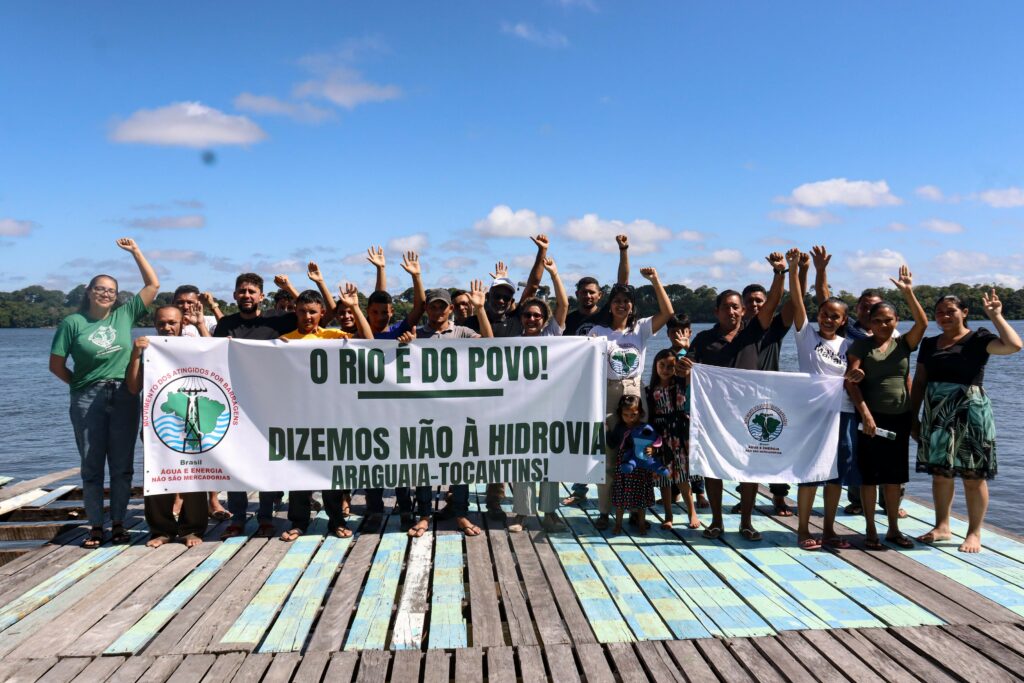
Progress is not this waterway!
“Progress is the life we already have. Because we have our açaí, we have our fish, we have our water, clean, good water that brings life to us,” reflects Fortunato Nery Ramos, a resident of the Carapajó community in Cametá (PA).
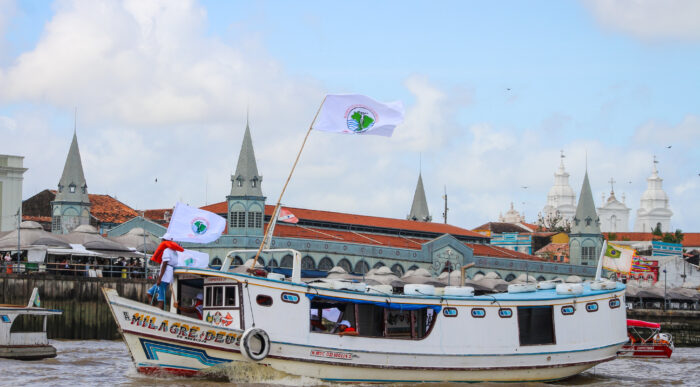
Known within MAB as Seu Nery, he and the riverside peoples of the Tocantins River face the threats of capital in the Tocantins-Araguaia waterway project. The plan foresees dredging more than 200 km of the riverbed, in addition to blasting about 35 kilometers of the Pedral do Lourenço, considered the cradle of aquatic biodiversity in the region. The works aim to enable the passage of large vessels transporting commodities, such as soy, minerals, and cattle, from the Midwest to the Port of Vila do Conde, in Pará.
In the Lower Tocantins, families organized by MAB in Cametá, Baião, and Mocajuba denounce the countless problems the megaproject will bring to local communities. The project disregards the river’s importance for the people who live by it and poses a profound threat to the ways of life of riverside, quilombola, and other traditional populations along its banks.
Denied the right to participate in decisions about a project that so deeply affects their territory, the affected families denounce that it will serve only — as so many others have — for the benefit and enrichment of agribusiness and mining: “We won’t have any benefit. We’ll only lose the little we have. Our fish will die both from the blasting of the Pedral do Lourenço and from the pollution of the water and the passage of barges,” explains Seu Nery.
The relationship with the territory is something common to traditional peoples, yet misunderstood — or rather, deliberately ignored — by capital. On this, Seu Nery emphasizes: “There is no other place for us to go. We were born and raised here; now in our old age, this is still where our lives belong.”
Already impacted by the Tucuruí Dam more than 40 years ago, the riverside peoples of the Tocantins now suffer under the implementation of the waterway: rushed licensing, denial of recognition for the affected, invisibilization of women and traditional communities, institutional violence, and the imposition of a development model that destroys everything in its path — typical of imperialism that seeks to dominate peoples and territories in order to exploit them for its own gain.
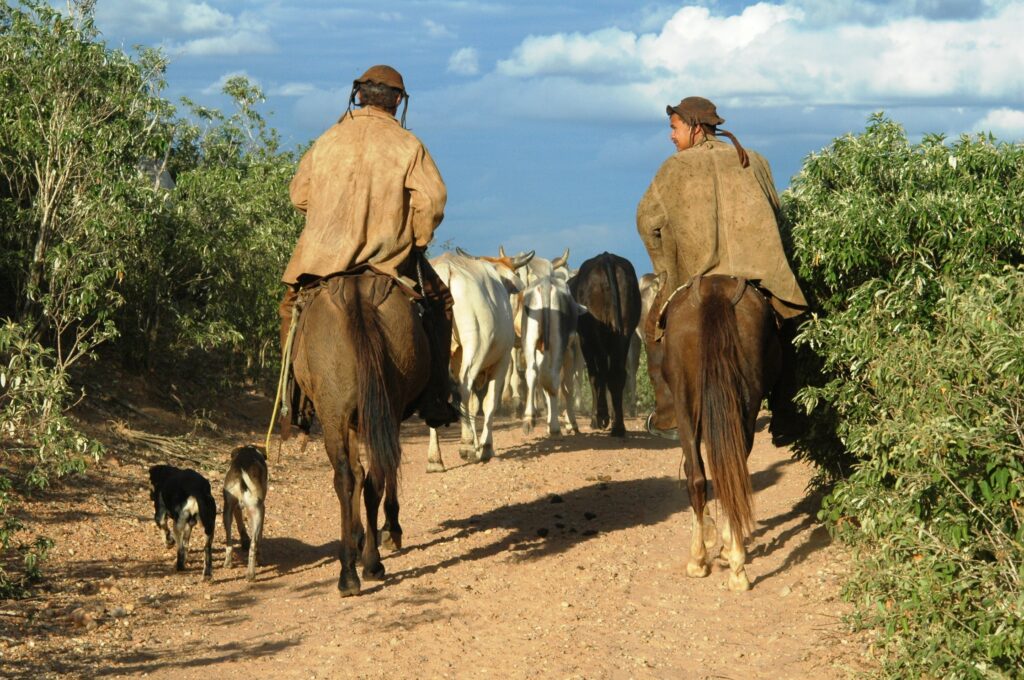
Struggle Is Not a Crime: The Resistance of Fundo and Fecho de Pasto Peoples in Western Bahia
In recent decades, Western Bahia has witnessed an intensification of agrarian conflicts, especially in municipalities such as Correntina and Formosa do Rio Preto. The advance of agribusiness, coupled with the land-grabbing of public lands, has had direct impacts on the traditional Fundo and Fecho de Pasto communities, who have inhabited these territories for centuries and play a fundamental role in preserving the Cerrado.
In this context of disputes, members and leaders of fecho de pasto communities have been persecuted and imprisoned, victims of weak legal cases or unfounded accusations aimed at criminalizing popular resistance, as in the case of Solange Moreira and Vanderlei Silva, fecheiros from the Brejo Verde community in Correntina. These arrests represent an attempt to silence voices denouncing the illegal appropriation of land and the violence of a production model that benefits a few at the expense of many.
“The struggle of these communities reflects the principles defended for decades by MAB. For us, the defense of territories and fair access to water as a common good are inseparable from the struggle for the country’s sovereignty, which cannot be built with violence and expulsion, but with social justice, secure territories, and popular protagonism,” emphasizes Moisés Borges, a member of MAB’s National Coordination in Bahia.
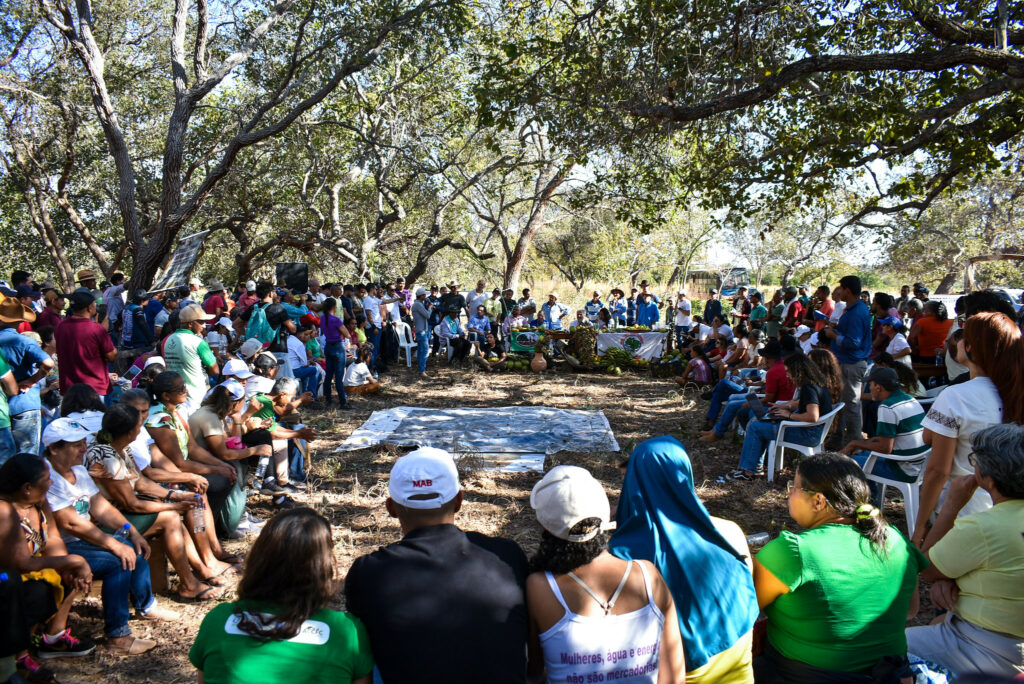
The disorderly expansion of agribusiness, driven by the interests of large national and foreign economic groups, threatens traditional territories and the environmental balance of the Cerrado. Reports of land grabbing, armed violence, judicial harassment of land rights, and state neglect have multiplied in recent years. This represents an attempt to commodify spaces that for centuries have been collectively managed by communities that, in practice, guarantee food security, environmental preservation, and the continued human presence in the countryside.
MAB has long warned that handing over the nation’s strategic resources to private capital represents a decline in sovereignty. The struggle of fecho de pasto communities shows that this is not limited to hydroelectric plants: rural territories are being converted into frontiers of plunder. And, as always, those who suffer most are the peoples who live in harmony with the land, who are there not as owners, but as guardians.
For Moisés, the connection between the struggle to defend traditional communities and the struggle for national sovereignty is direct: “Without popular control over the territory and its natural resources, there can be no true autonomy of a country over its own destiny. The defense of these territories is the defense of a project for Brazil where natural resources serve the people, not profit,” he concludes.