To assist affected regions, MAB sets up 10 kitchens in Rio Grande do SulPara atender regiões atingidas, MAB estrutura 10 cozinhas no Rio Grande do Sul
In addition to meals, a task force from social movements is also bringing drinking water to homeless or isolated people in different neighborhoods across the city.
Published 07/05/2024 - Updated 26/09/2025
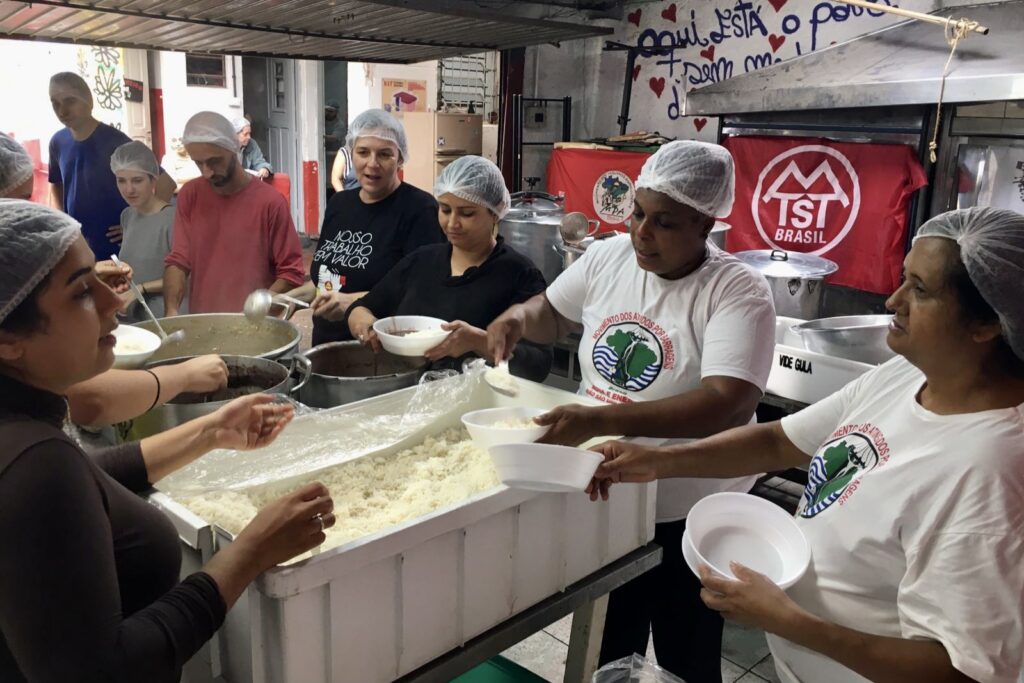
In addition to its work in the Solidarity Kitchen in the Azenha neighborhood of Porto Alegre (RS) and in the municipality of Arroio do Meio (RS) in the Taquari Valley, the Movement of People Affected by Dams (MAB) is planning to set up around 10 solidarity kitchens in the interior of the state to assist those affected by one of the worst climate tragedies the southern region has ever experienced. The biggest challenge is traveling to the areas most severely affected by the heavy rains that have been falling in the state since the 26th. In total, official data indicates that 1.4 million people have been affected, with 95 deaths and 131 people missing.
Currently, the Solidarity Kitchen, in which Movimento works alongside the Movimento dos Trabalhadores Sem-Teto (MTST) and Periferia Feminista in the capital of Rio Grande do Sul, distributes around 2,000 meals. The work relies on the help of volunteers from the city working in three shifts and involves collecting food, producing and distributing meals to homeless people in temporary shelters and affected areas, such as the Sarandi, Sertório, and Lami neighborhoods, among others. The idea now is to reach municipalities in critical situations in the interior.
“The river is still very high, but we are already working in the Taquari Valley, where those affected have organized themselves and are preparing meals. Our main focus now is to save lives and bring water and food to the people of Canoas and the Baixo Jacuí region, who are in dire need. There are people scattered everywhere waiting for help. What we are experiencing is absurd,” says Alexânia Rossato, a member of the MAB coordination team in Rio Grande do Sul. The risk of dam ruptures is also an aggravating factor in several regions of the state.
Maria Aparecida Luge, one of the members of MAB who heads the Solidarity Kitchen in Porto Alegre, says that many people are willing to help, but the situation in some regions of the state remains desperate.
Logistics are very difficult. There are neighborhoods in the capital that have no light, no electricity, no water, no access bridges. In the countryside, there are towns where not a single house is left standing. In addition, traffic is impractical for delivering meals, because many people are heading to the beaches. There is also no gasoline, because fuel trucks are unable to get through,” explains Luge.
She says that, little by little, trips are being made with escorts to bring water, medicine, and food to the most isolated areas. What we have been able to do is still small, but it is important. “The plate of food we offer is a comfort, a hug, a welcome, but we still need more effort from the government to save people,” says the activist.
Isolated municipalities
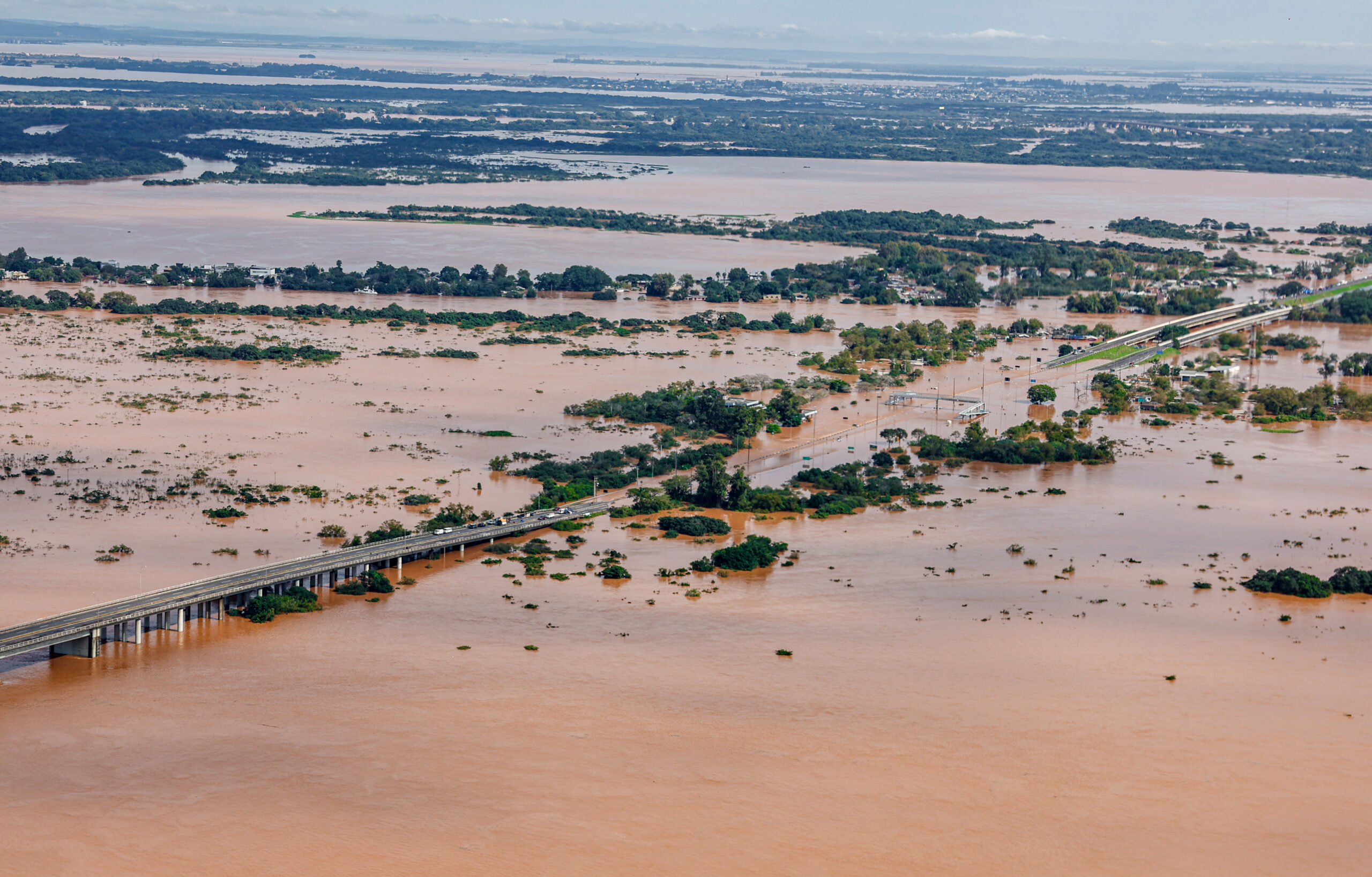
Given this scenario, MAB coordinators are calling on more members of the Movement to travel to the state to reinforce efforts to support those affected whenever possible. “We are mobilizing activists from other states to come to Rio Grande do Sul to work in the kitchens that will be set up in regions that are still isolated and without land access. Even with the logistical difficulties, we are currently seeking the necessary conditions to reach the communities that are in the most critical situation,” explains the leader.
Margareth Augustine, a resident of the municipality of Roca Sales, was one of the people affected by the floods. According to her, there were many landslides in the city that forced people to leave their homes, as in her case. After surviving the tragedy, she is now trying to rescue neighbors from the roofs of isolated houses.
I am still working, getting people off the roofs, but the situation is not good. The connection works from time to time, like now, but we don’t have regular internet, electricity, or water. People need at least a dry bed to sleep on at night, and they need water and food. We are surviving on the few donations that some volunteers are sometimes able to bring, because the Arroio do Meio bridge, which provides access to the municipality, has collapsed,” explains the victim.
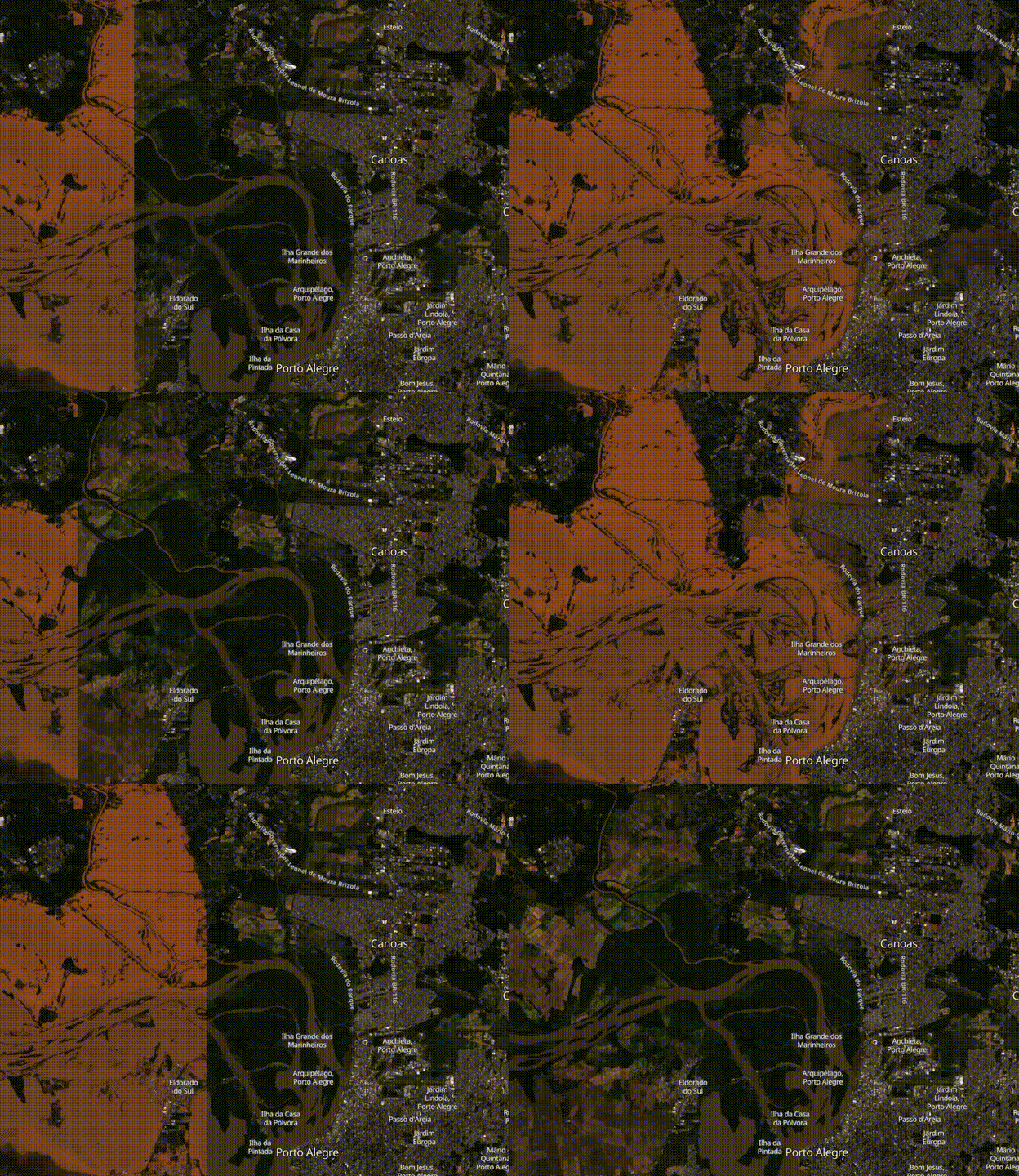
Also a member of the MAB coordination team, Leonardo Magi managed to reach the Taquari Valley to set up the Solidarity Kitchen in the region. “We are here in the region organizing the kitchens and the relocation of people in a very difficult situation, a very difficult situation indeed. There is not enough accommodation for everyone, and the accommodation that does exist has no electricity and not even drinking water. People haven’t been able to bathe since the day of the flood,” says the coordinator.
People have been in this situation for a week now, with no solution in sight from the government. So we need to apply pressure to get water and electricity so that people can stay in their homes in decent conditions,” he adds. At this moment, 203,800 people are away from their homes—more than 48,800 are in shelters and 155,700 are staying with family or friends.

State negligence
In 2024, the Rio Grande do Sul state government’s budget for the purchase of Civil Defense equipment was only R$ 50,000. Governor Eduardo Leite’s (PSDB) first term changed 480 points of the Environmental Code at once. The state budget for 2024 allocates only 0.2% of resources to combating the climate crisis. This means that of the R$ 83 billion budget, only R$ 157 million is allocated to areas related to the climate crisis.
How to help
We stand in solidarity with the people of Rio Grande do Sul, where more than 850,000 people in 345 municipalities have been affected and 121,957 have been displaced. We reaffirm our struggle and commitment to maintaining the organization of those affected, in solidarity. We are grateful for every donation.
— MAB (@MAB_Brasil) May 6, 2024
🤝🏻https://t.co/IPe2h431qW#AtingidosDoBrasil pic.twitter.com/cNzcOR7u1q
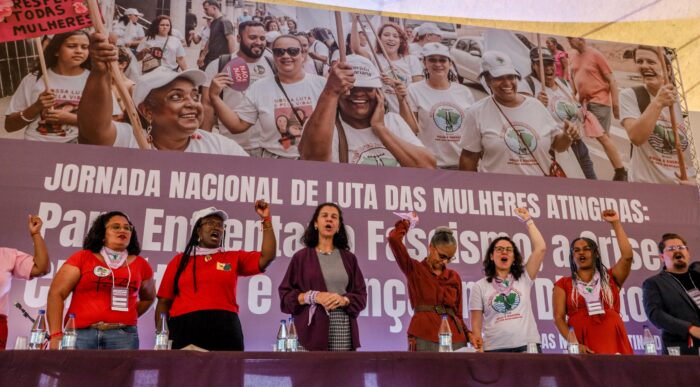
Minister Marina Silva participates in the opening of MAB Women’s Struggles Journey, in Brasília

Clean up the Amazon: project in partnership with MAB transforms the reality of affected families