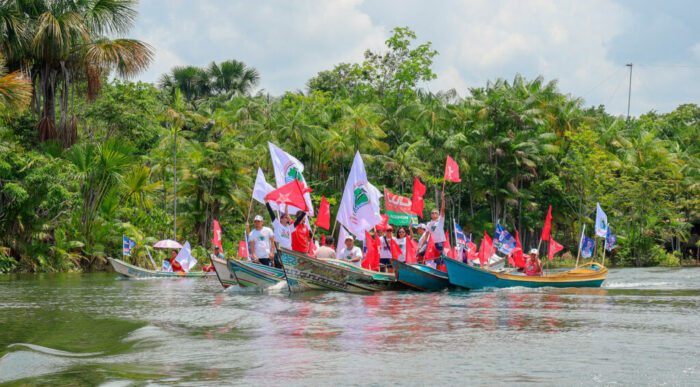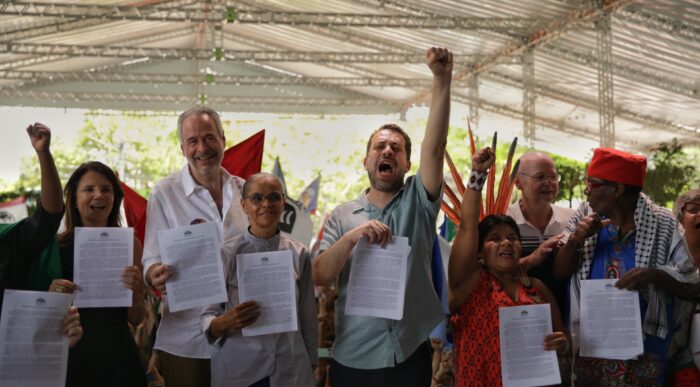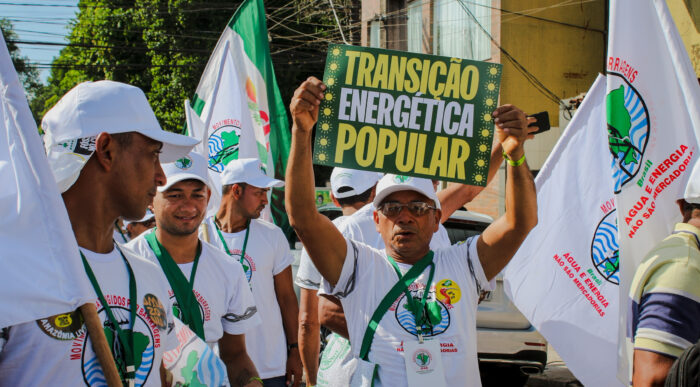

Affected people will debate combating false solutions to the climate crisis and historical reparations at the People’s Summit
MAB members will participate in Axis 2 of the People’s Summit, which will debate historical reparation, the fight against environmental racism, false solutions, and corporate power
Published 17/10/2025 - Updated 10/11/2025
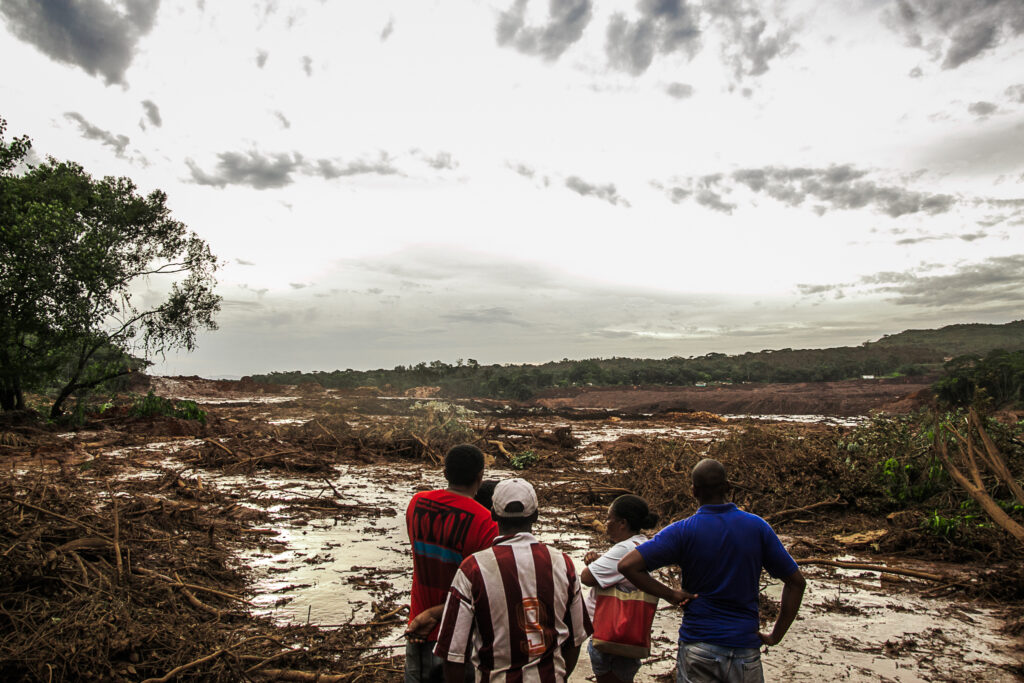
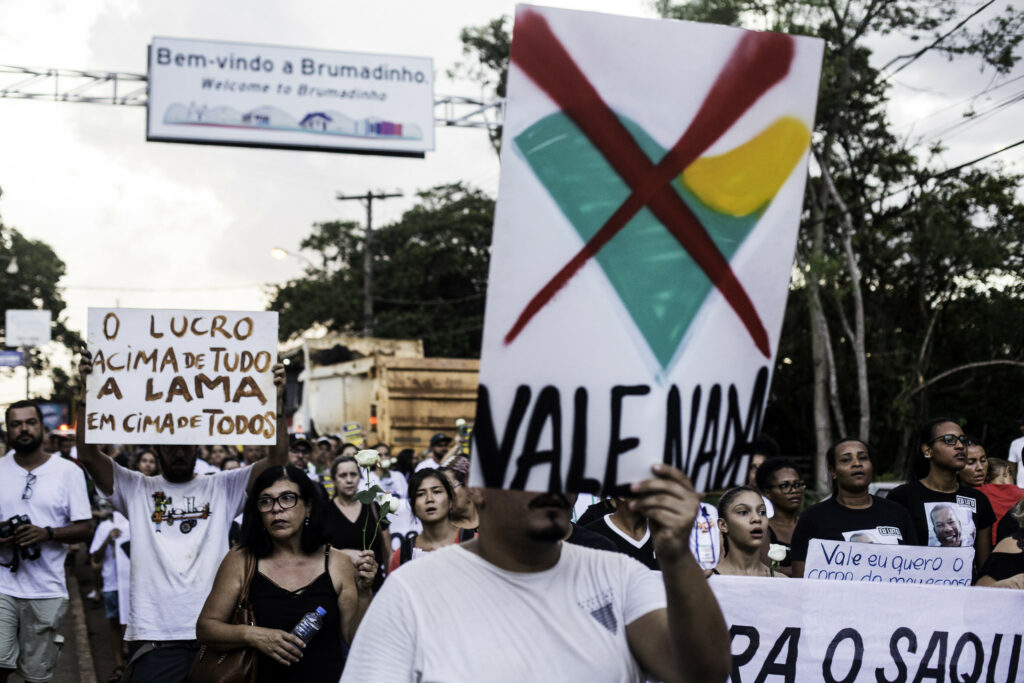
As part of the collective agenda of the People’s Summit towards COP30, Axis 2 proposes debates on the direct confrontation of the structures that sustain the climate crisis and global inequality. The Movimento dos Atingidos por Barragens (MAB) and various popular organizations denounce the large-scale projects of agribusiness, mining, the hydro-business (water commodification), and industrial aquaculture, which encroach on territories, privatize common goods, and threaten the lives of people, their lands, and their socio-biodiversity.
The Axis proposes to confront and denounce the “false solutions” to the climate crisis, such as the financialization of nature, the green and blue economy, bioeconomy, and geoengineering. These are mechanisms that turn nature into a commodity, perpetuate historical inequalities, displace communities, and exploit women in particular. These power structures deepen and burden women with caregiving tasks, ensuring profit for a few at the expense of their labor and time. In territories impacted by large projects, it is women who bear the burden of water scarcity, food insecurity, and the loss of community ties, while simultaneously leading strategies of resistance, the struggle for sovereignty, and for environmental justice.
Among the guidelines to be presented and debated are the defense of solutions built by the people themselves, such as agroecology and social technologies, which are recognized as paths for adaptation and mitigation in the face of climate change. The Axis also proposes the cancellation of the illegitimate debts of Global South countries and the payment of the ecological debt by Global North countries, to guarantee economic and environmental justice.
“In the understanding of MAB, those who have worsened climate change or placed the world in its current condition, of imminent risk from the many problems we are experiencing, are the transnational corporations that exploit all of our natural resources and put profit above life,” states Moisés Borges, from the national coordination of MAB
The Movement reaffirms its commitment to the agenda of this Axis, emphasizing the need for comprehensive reparation for populations affected by dams, dam failures, and climate disasters; as well as the strengthening of public policies for social protection, income generation, and access to water and energy as human rights.
MAB also advocates for the accountability of companies and public agents for environmental crimes, the protection of human and socio-environmental rights defenders, and the ratification and implementation of the Escazú Agreement. This is the environmental treaty for Latin America and the Caribbean that promotes transparent environmental governance through access to environmental information, public participation in environmental decision-making, and access to justice in environmental matters. Brazil signed the agreement in 2018 but it still awaits ratification by the National Congress.