INTERVIEW | Vijay Prashad: “Hyperimperialism rules through fear. We must name power in order to confront it.”
The intellectual analyzes how the US’s dominance of weapons and information sustains hyperimperialism, undermining the sovereignty of peoples; why the very construction of collectivity is central to a vision of the future; and how the battle for information and emotions is decisive for the peoples of the Global South
Published 11/02/2026 - Updated 11/02/2026
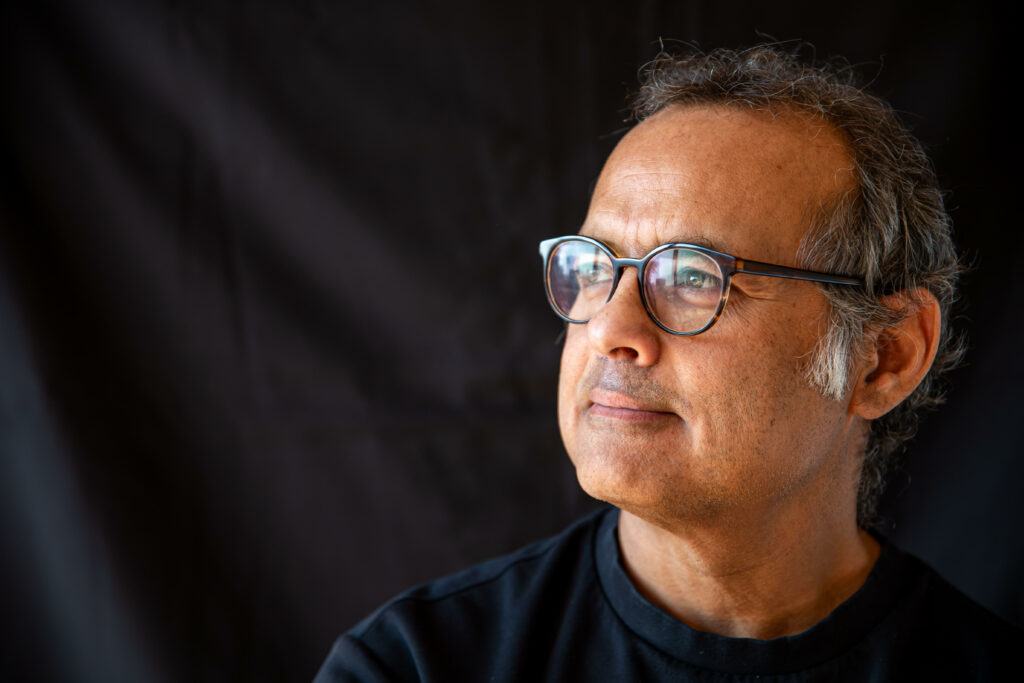
Vijay Prashad is a historian, journalist, and one of the leading contemporary interpreters of the geopolitics of the Global South, as well as director of the Tricontinental Institute for Social Research. For Brazil and Latin America, his importance lies in offering an analytical vocabulary that avoids a moralistic reading of international politics. Instead of repeating the vague idea of US decline, he insists on a methodology—inspired by French-Egyptian economist Samir Amin — to measure power and dispute, noting that the leading power needs to control five areas of human life and that, today, Washington “finds itself in a difficult position” in three of them, but maintains overwhelming dominance in two: weapons and information.
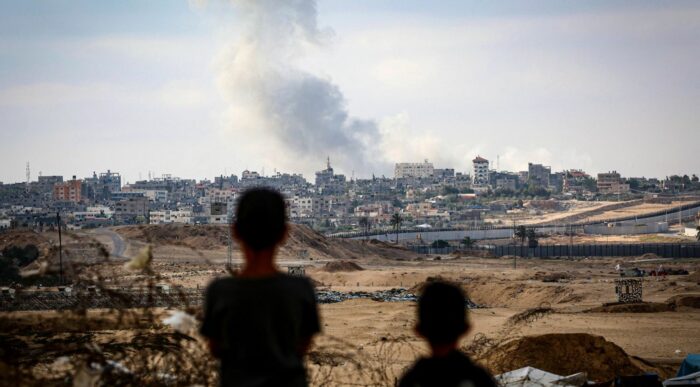
Prashad does not sugarcoat the present. He describes hyperimperialism as ruling by fear and submission—the threat that if a country “dares to challenge the United States, it could be turned into Gaza.” — and denounces the so-called hybrid forms that enter hearts and minds to demoralize alternative political projects and create confusion, fueling a “vibrant market of disinformation that sabotages projects” and reorganizes daily life according to the interests of capital.
But it is precisely by facing the issue head-on, with a harsh diagnosis of the present, that a political gamble is made: to look at the devastation as it stands in order to imagine the future as a practice of the present, or “the future contains what you put into it today,” and to reestablish the construction of collectivity as a horizon, because “the revolution is not just about winning material battles,” it is about rebuilding bonds, in a “battle of emotions” that begins with the simple gesture of “leaving your cell phone in your pocket and talking to the person next to you on the bus.”
You and the Tricontinental Institute have used the concept of “hyperimperialism.” What exactly differentiates this phase of imperialism from previous forms of capitalist domination?
Vijay Prashad – We were led to think about the decline of the United States. There was a lot of talk about it, and I wasn’t really confident that we had a good methodology for assessing that decline. You can’t just say something like that as a moral characterization. We adopted the method of Samir Amin, who argued that in the modern world, there are five areas of human life that a power that wants to be the leading power must control. What we found in these five areas is that in three of them, the United States is putting itself in a difficult position, failing to control them; in two areas, they have maintained overwhelming control.
First area: control over raw materials. The United States has no control over raw materials. Chile is an exporter of many raw materials, and we will have a far-right government in March. Even so, Chile will still have to export to China The United States cannot absorb all the lithium, copper, or iron ore.
Second area: control of finances. There was a time when the dollar’s hegemony was maintained, but now, more and more countries are using local currencies; not so much in Latin America, but increasingly in Asia, Eurasia, and parts of Africa. Part of this is because they have been sanctioned; when you sanction a country, it cannot access dollars. The dollar’s hegemony has not collapsed, but it is being challenged.
The third area of human life that is being challenged in terms of control is science and technology. After the 1940s, the United States had overwhelming power in science and technology; Japan began to surpass them, so the US imposed restrictions on the value of the Japanese currency. Now, the US is trying to break China’s ability to access semiconductors and chips; the Chinese have simply developed their own chips. The Chinese develop their own computers from start to finish. These are the countries that challenge control over science and technology.
But in two areas there is no decline, and the United States remains overwhelmingly strong. What are they? Information. Take the case of the Brazilian mass media: the Brazilian media forms its understanding of what is happening in the world from the Associated Press, Reuters, CNN, the BBC, this and that, but not from a global correspondent sitting in India or sitting in Zambia. The news is derived from the West. Chinese and Russian news agencies try to compete with the US, and then the US attacks them, saying they are mouthpieces for the Chinese state, and in some countries they are banned from operating. No one takes CGTN as seriously as CNN. You don’t take China Daily as seriously as you take the New York Times. The control of information is impressive.
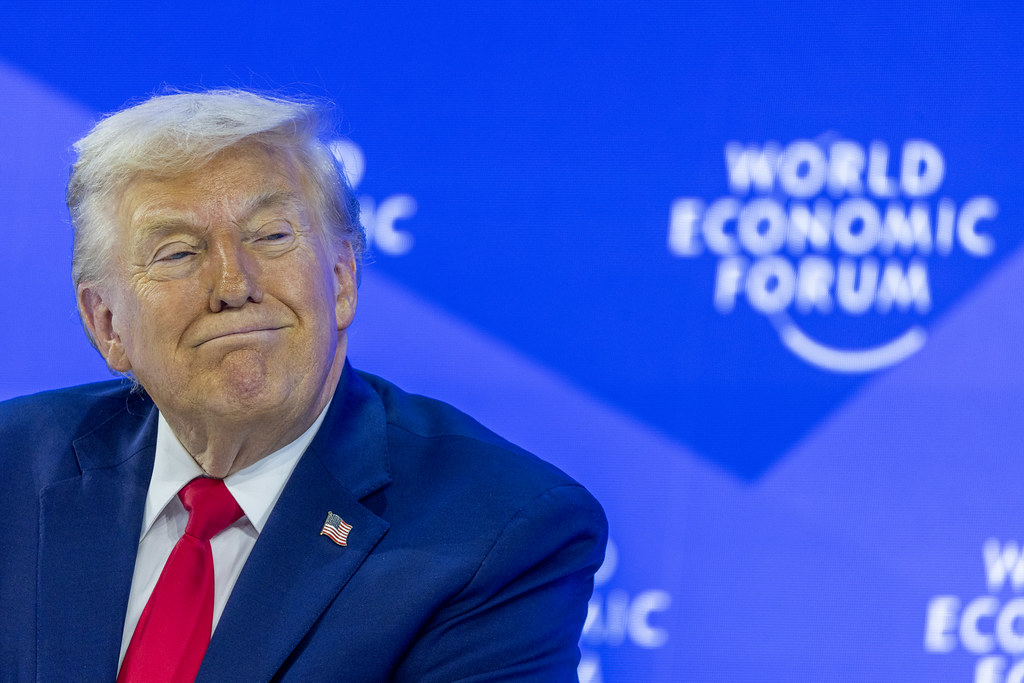
See how the United States can say that China is conducting genocide in Xinjiang, but people hesitate to call what is happening in Palestine genocide. Incredible control of information. The last area is arms control. Trump himself said this in Davos: we disrupted Venezuela, they didn’t know what was going on, they didn’t fire a single anti-aircraft gun, there was no agreement with Delcy Rodríguez, they simply destroyed the radar systems and there were 150 planes flying over Caracas. No one could hit that.
This overwhelming military power and the power of information are the key to hyperimperialism, because at this point there is no inter-imperialist conflict. The US faces no challenge from China or Russia, and neither of them are imperialist powers.
They are trying to maintain their role as the center of privilege by using their two forms of control—weapons and information—and let’s say this clearly: Trump is doing an excellent job of maintaining fear. He has repeatedly emphasized that Europeans are afraid of him, that Iranians are afraid of him.
How are these manifestations of hyperimperialism expressed in the countries of the Global South?
Vijay Prashad – With fear and submission. If you dare to challenge the United States, they will turn your country into Gaza. They showed this to Iraq, they showed it to Afghanistan; now Trump says openly: look what we did to Venezuela. The second impact is that they want to reverse development. They don’t want countries to develop. In Niger, for example, they want to control its minerals, they want to sell them at prices they determine. This hyper-imperialism will undermine the argument for sovereignty: why should you exercise sovereignty? You have to submit to the US. Why should you try to make a deal with China? We forbid you, we will not allow you to negotiate with China. If you are driving a bomb, that’s fine. You want to sell your raw materials? Maybe that’s okay, but why don’t you use a U.S. shipping company?
You are selling your soybeans to China, buy products made in the US with the money you are earning, do not buy Chinese products. This is what directly impacts people’s lives. Things become more expensive. You are forced to accept an agreement with the United States, not necessarily a good agreement.
Is this what you would call “hybrid forms of power projection”?
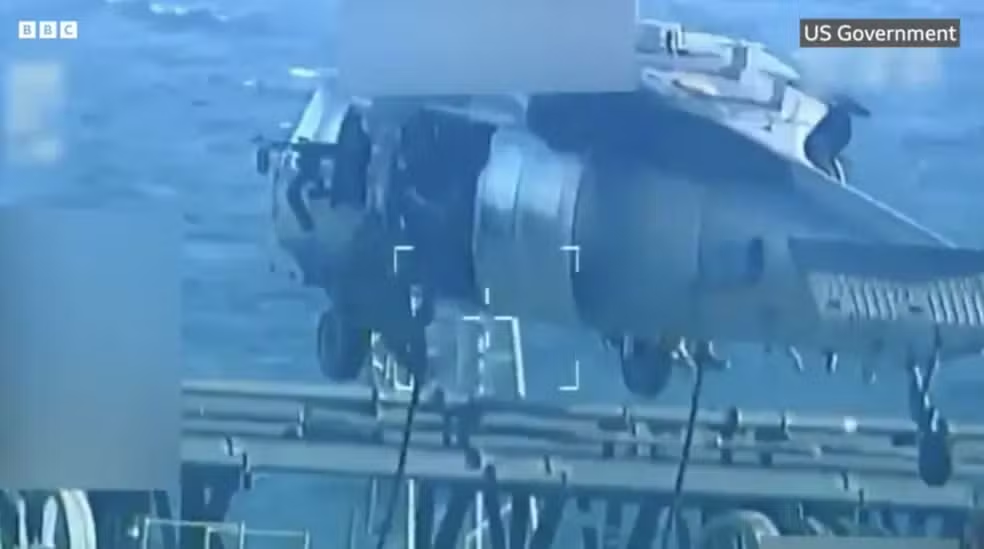
Vijay Prashad – Much of this idea comes from the US government itself. They know and have openly said that they have all kinds of tools to enter countries and try to create instability. It is very easy to control the internet; most of the platforms used around the world, except in China, are Western applications. Brazil has almost zero digital sovereignty. Brazil’s submarine cables are owned by Western companies. They don’t belong to the government. The satellites above you are mostly Western. They can make you disappear from people’s news feeds. These are tools they have, easy to use. They can spread malicious stories. They have been doing this since at least 1945; I have interviewed many CIA agents who say this directly. Now there are all kinds of stories circulating saying that Delcy Rodríguez sold Nicolás Maduro to the United States, but they are all anonymous sources. Why is everyone publishing the same story at the same time? Why are Brazilian newspapers repeating these stories if they have never been interested in the complexities of Venezuelan politics? Now they say it’s a palace coup. Why don’t they talk about the weapons the United States used? It was a Growler plane that left Puerto Rico and flew over the coast of Venezuela; they have been experimenting with this since the attack on the boats. The attack on those boats was part of a worldwide experiment with Venezuela’s airspace. It’s all in the public record.
Why aren’t people interested in this? Hybrid warfare is about getting into your head, demoralizing you. It’s about creating confusion. It’s about saying: Lula is involved in corruption. And it starts way back, with a whole process to make people start thinking that the Workers’ Party is a corrupt party. Even if three days later they say, “Well, it’s not quite like that,” the population already believes it. It’s over. This is how a vibrant market for disinformation is formed. It slows down companies, sabotages public projects, and cuts funding for important things that should be funded.
And how does this phase of hyperimperialism accelerate climate catastrophe? Is there a direct link between militarization, extractivism, and environmental destruction?
Vijay Prashad – There is a study that shows that the US Pentagon, which has 900 military bases abroad, is the world’s largest institutional polluter.
In international climate negotiations, the US forced other countries not to include military pollution in their national emissions data. So US civilian pollution is included, but military pollution is not, even though we now know that the US military is the largest institutional polluter on the planet. Even without war, the mere existence of the military apparatus is destructive. With war, it is obviously devastating for the climate.
Look at Gaza: when you blow up a building, it’s not just the bomb. The building itself becomes a crime scene, full of toxic chemicals. Children breathe in asbestos, glue, toxic dust; it affects their bodies. There are tons of toxic debris that are often pushed into the sea or into waterways.
Another important point is that in Asia, China, India, and other countries are leading the way in green technologies. The Chinese are the largest producers of solar energy. The US and Europe should collaborate with China to make green technology part of everyday life. There is no reason for you, in Brazil, to depend on coal, gas, or oil. But the new Cold War against China prevents the cooperation needed to address the climate crisis.
And what do these economic wars, interventions, sanctions, and blockades reveal about the nature of sovereignty in today’s international system?
Vijay Prashad – Just listen to Trump’s speech, he said clearly: if you sue me, I’ll put an X on you. Look what we did to Venezuela. Behind that is: look what we did to Gaza. If you misbehave, we’ll destroy you. In the 1964 coup in Brazil, there were U.S. warships off the coast between Rio de Janeiro and São Paulo sending a direct message to Goulart’s supporters: if you resist, we will bomb your cities. They didn’t care how many Brazilians would die, as long as some bossa nova musicians survived. That was all they wanted from Rio at the time. They were ready to bomb.
When the military moves, what can you do? Nothing, you surrender. They don’t care. Even critics of Maduro said: today it’s Venezuela, tomorrow it could be anyone.
Lula recently commented on this in strong terms, saying he was disgusted. But even so, symbolic gestures of solidarity, such as opening borders to trade, did not happen. Even progressive governments were paralyzed by fear. What sovereignty are we talking about? Perhaps it never fully existed. Brazil had 21 years of dictatorship. What sovereignty was there? Where did the orders come from? Now we know, thanks to revealed documents.
A year ago, you said that the future should be understood not only as something distant, but as political and ecological accessibility, as concrete hope. What does this mean for social movements today?
Vijay Prashad – In May, we (Tricontinental Institute) will publish our 100th dossier, which will be about the future; a materialist analysis of what this philosophical idea of the future means. The text discusses what tomorrow means, what hope means. It is important that people without access to university also understand these concepts in order to imagine the future. The problem is that social movements live in the present. They are helping people to survive. We provide social assistance and legal support. This is about surviving, not building the future. The state has disappeared, society has closed itself off to suffering. So the movements do the work of survival. That is why we need to document the seeds of the future that we are already building today. In China, Venezuela, and Cuba, we see the dedication of activists, doctors who go to crisis zones, people who risk their lives. How do you build a party with that level of commitment? You can’t wait for the future. The future contains what you put into it today.
How important is it for activists to dedicate themselves to social movements today?
Vijay Prashad – It is important for young people to think about what kind of world they want to live in. A world of inequality, walls, police everywhere, loneliness, depression? We need to create community. I don’t want anyone to feel suicidal. I myself suffered from depression for years. The world is lonely.
Collectivity begins with conversations, listening, and caring. Revolution is not just about winning material battles, it is about building human relationships that are not based on the market. In other words, put your cell phone in your pocket and talk to the person next to you on the bus. These interactions create social bonds. This is part of the future. We are not just fighting a battle of ideas, but a battle of emotions. We need to change the emotional register of human relationships.