People’s Summit: MAB strengthens debate on fair and popular energy transition
The Movement is included in the six areas of discussion at the Summit, but places special emphasis on the third, which addresses energy transition
Published 08/10/2025 - Updated 10/11/2025
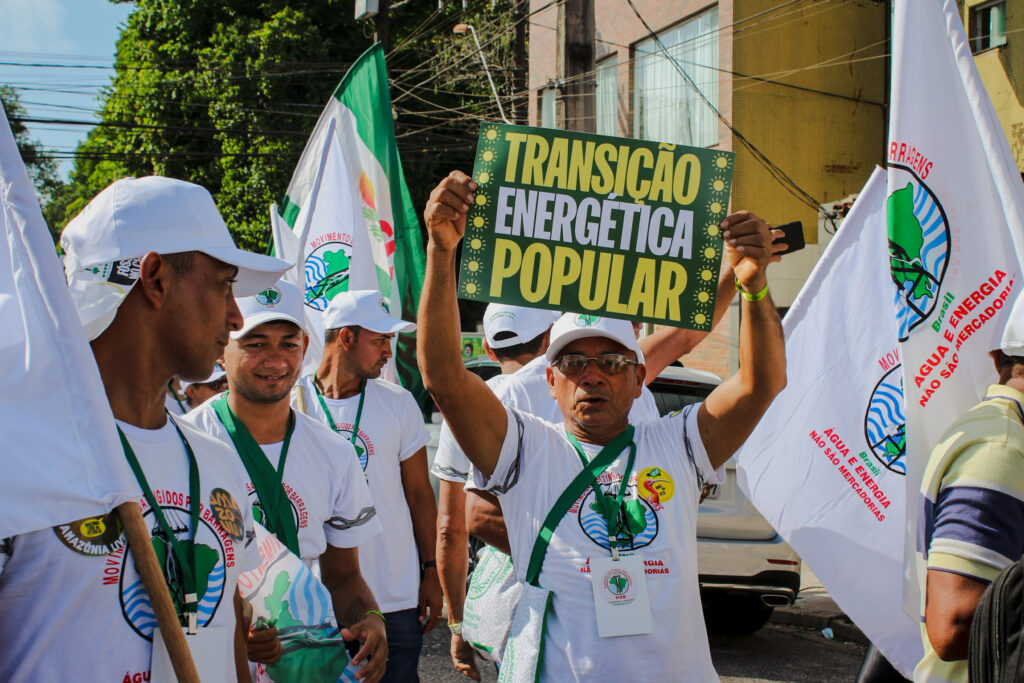
One of the main agendas of the Movement of People Affected by Dams (MAB) in recent years has been the struggle for a fair, popular, and inclusive energy transition, a theme that will be highlighted in Axis 3 of the People’s Summit. The event, which takes place in Belém (PA) in parallel with COP30, proposes to organize its reflections and proposals around six axes.
In constant dispute, the concept of energy transition has become a good cover for the contradictory interests of capital, and has been increasingly used to announce the replacement of fossil fuel sources – such as oil and coal – with cleaner and renewable options. At first glance, the discourse may sound appealing, but it fails to address fundamental issues facing the affected populations and always subordinates public interests to private interests.
For MAB, it is not possible to achieve a fair and popular energy transition in Brazil without a radical change in energy policy. Dalila Calisto, a member of the movement’s coordination team, explains that this transition cannot be merely technological, but must also be social.
“There is no point in changing the source without discussing why the energy is being produced and who will appropriate it. In this sense, a just and popular transition means changing the energy model, redefining the role of the state and foreign companies that, for years, have appropriated the wealth produced by workers in the electricity sector. We cannot accept a transition that penalizes workers and the most vulnerable populations, such as women and children, riverine communities, and traditional peoples”.
MAB’s participation in the construction and debate of this third axis of the People’s Summit is also part of the struggle against the dismantling of environmental legislation that we are witnessing in Brazil, which threatens compliance with the National Policy on the Rights of Populations Affected by Dams (PNAB). In this process of reaffirming achievements and presenting their agendas, those affected advocate for the creation of a permanent fund for affected populations and believe that “it is fair and necessary that populations, which have been violated for decades by the Brazilian State and transnational companies, have the right to fair compensation.”
In the activities of axis 3 of the People’s Summit, MAB points out the contradictions of this model that does not serve the people, proposing a just transition that considers the interests of the working classes and popular communities, both urban and rural, with decision-making processes in the hands of the people. At the Summit, MAB will denounce that the energy transition proposed by transnational corporations is presented as a solution for decarbonization, but is in the interest of capital because it expands new fronts for accumulation. In capitalism, there is no technological change that does not aim to extract more value,” warns Dalila.
“It is necessary to dispute ideas”
The statement comes from Fabíola Antezana, from the National Collective of Electricians (CNE). For her, capital created the climate crisis and now presents what it considers to be the necessary responses to overcome it. “It’s a win-win game for capital,” she says.
The risk, she says, is that many people are unable to see this reality and may be persuaded by the solutions presented—for which COP30 seems to be a privileged space. Therefore, it is urgent to take a critical look at reality, even during COP and the Summit, so that “based on the contradiction, we can form leaders capable of acting in favor of a new form of fair, popular, and inclusive transition”.
The axes of debate at the Summit
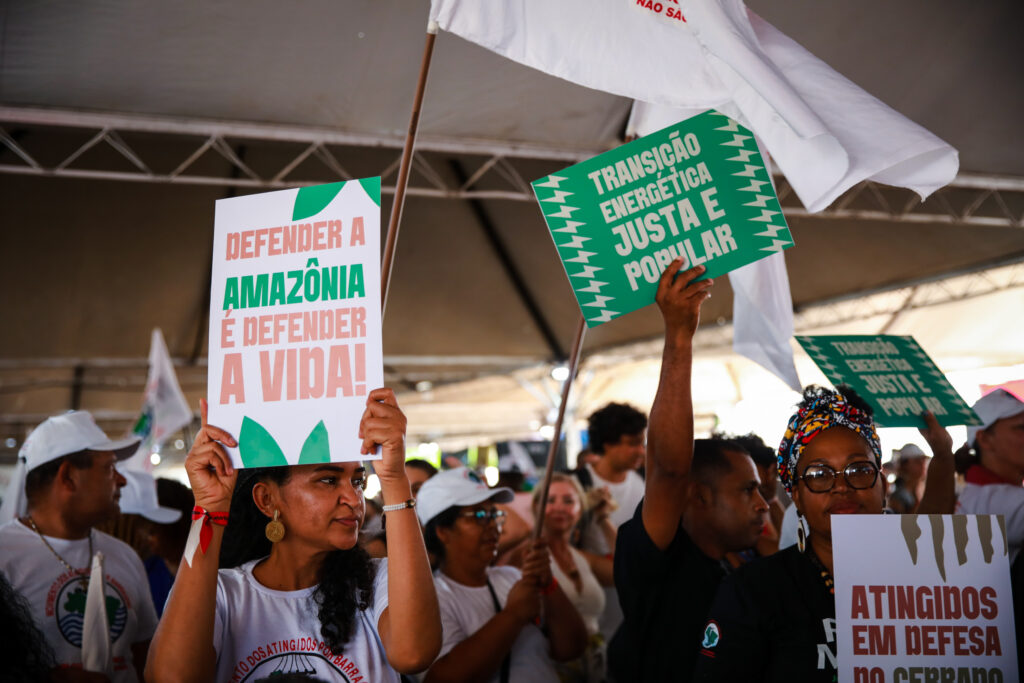
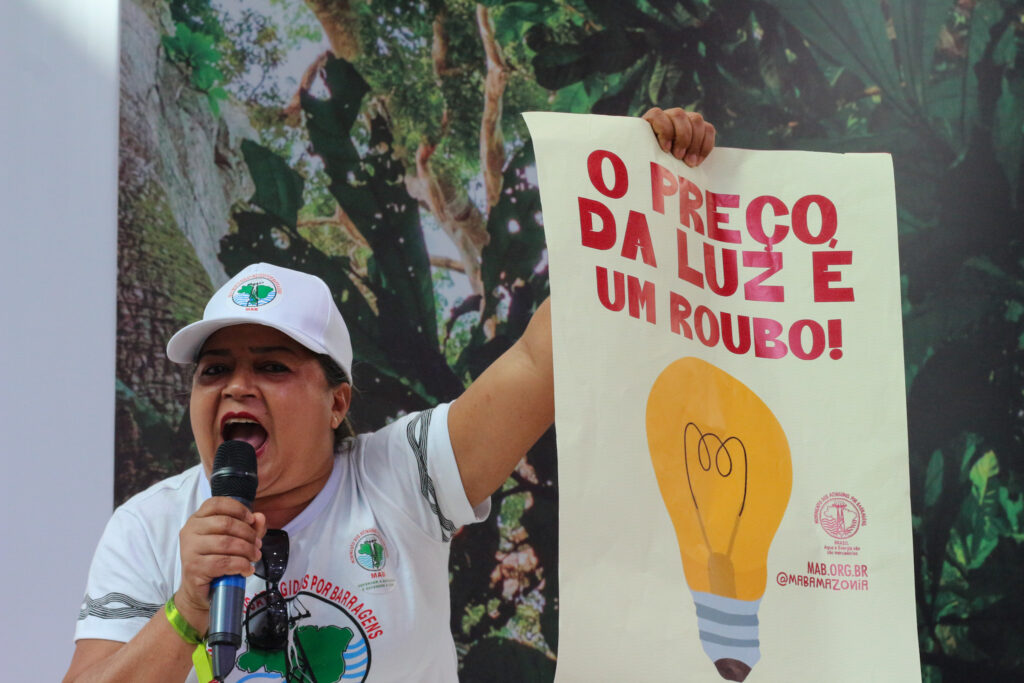
The Movement of People Affected by Dams is expected to bring around 1,000 affected people from Brazil to the People’s Summit, in addition to the 200 delegates from the IV International Meeting of Communities Affected by Dams and Climate Crisis. For the days of the event in Belém, the 1,099 organizations that make up the Summit are coordinating a broad agenda, divided into six central axes. They synthesize the collective political project and constitute an agenda for the struggle of peoples around the world.
The first axis of the People’s Summit focuses on the struggle to defend the territories and rights of the peoples of the waters, rivers, seas, mangroves, forests, cities, and countryside. The second proposes to confront large agribusiness projects, guaranteeing historical reparations, combating environmental racism, false solutions, and corporate power. The third, explored in depth in this text, demands a just and popular energy transition, while the fourth axis reinforces the struggle against oppression, for democracy, and for the internationalism of peoples.
In the fifth axis, the Summit focuses on urban peripheries and confronting the climate crisis in large cities. Finally, the sixth axis debates popular feminism and women’s resistance in the territories, also based on their leading role in socio-environmental struggles.
In the coming weeks, you can follow the articles on the MAB website that delve deeper into the proposals for debate in each of the six axes of the People’s Summit.